 Ujjawal Laddha
If you run a digital agency, you know how quickly client demands can grow. One day you’re focused on SEO or branding, and the next, a client needs a full-blown website fast. But building and managing websites takes time, the right skills, and a reliable team. And let’s be honest, not every agency has an in-house setup for that.
That’s where white label web design comes in.
It allows your agency to offer professional web design and development services under your own brand, without doing the work internally. Your clients get beautiful, functional websites — and you get to focus on what you do best, without the overhead of building a development team from scratch.
In this guide, we’ll break down exactly what white label web design is, how it works, and why it’s become a go-to solution for growing agencies.
60 Second Summary
- White label web design lets your agency deliver fully branded websites without having to build them yourself – perfect for focusing on your core business while still offering in-demand design services.
- You work with a white label partner who handles the behind-the-scenes work, while you deliver the finished site under your own logo and unique brand identity, your client never knows the difference.
- It’s a cost-effective and scalable business model that helps you save time, reduce production costs, and avoid hiring full-time in-house developers.
- From fast builds using a white label website builder to complex custom branding and development services, you stay in control of the project while someone else does the heavy lifting.
- It’s a great solution for agencies, freelancers, or anyone looking to grow their own web design business and manage more projects without sacrificing quality or client trust.
What is White Label Web Design?
In simple words, white label web design is when one company creates websites that another company sells under its own brand.
Your agency handles the client relationship, and a white label partner does the behind-the-scenes work — designing, developing, and sometimes even managing the site.
The final product is delivered as if your agency built it from scratch. The client sees your logo, your brand identity, and your team. But the actual work may have been done by a dedicated white label web design agency working quietly in the background.
This setup is especially useful for agencies that want to offer website design services without hiring an in-house team of developers or designers. Whether it’s a full custom solution or a quick turnaround using a white label website builder, the goal is the same: give your clients high-quality websites while you stay focused on your core business.
Looking to offer web design without the overhead?
Partner with AgencyMinds and deliver stunning, fully branded websites to your clients without building an in-house team.
How Does White Label Web Design Work?
White label web design is a partnership model that lets you expand your services without expanding your team. It’s simple in theory, but when done right, it can completely transform the way your agency works.
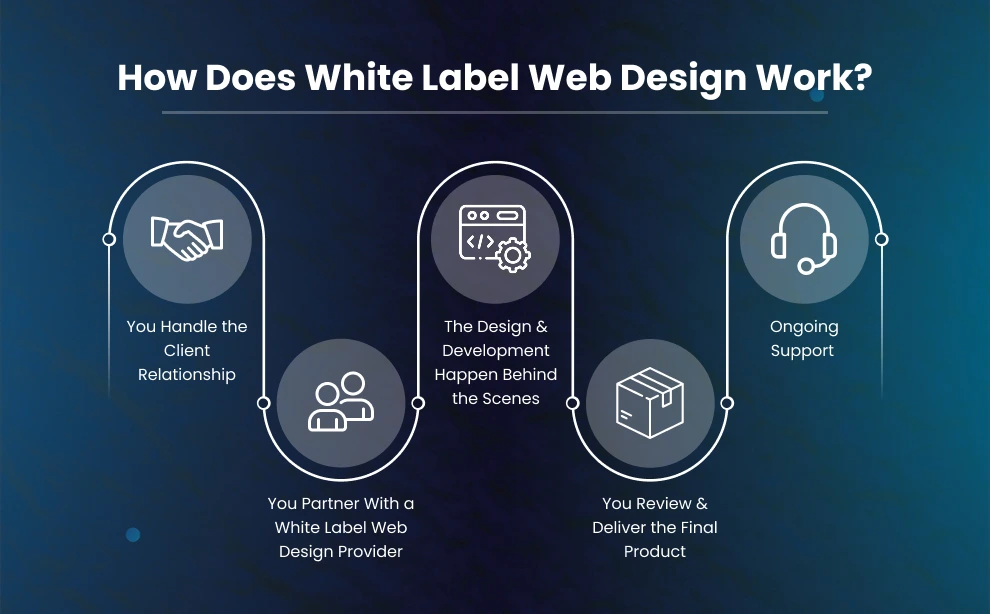
Here’s a closer look at how it typically works from start to finish:
1. You Handle the Client Relationship
You’re the face of the project. Your client trusts your agency, so everything starts with you. From the first discovery call to defining the project scope, goals, timelines, and budget, you’re in charge of gathering all the necessary input and managing expectations.
2. You Partner With a White Label Web Design Provider
Once you’ve locked in the project, you collaborate with a white label partner (like AgencyMinds) who handles the technical work – website design, development, testing, and sometimes even content and maintenance.
The best part? The entire process is carried out under your brand name. The client never interacts directly with the service provider, and they don’t need to.
3. The Design & Development Happen Behind the Scenes
Your white label team works in the background, following your lead. Whether you’re building a custom WordPress site, using a white label website builder, or handling eCommerce development, your partner takes care of the details — from layout and functionality to mobile responsiveness and performance.
You can stay involved as much or as little as you want, depending on the project and your workflow.
4. You Review & Deliver the Final Product
Before the site is handed over to the client, you review everything to ensure it meets your quality standards and matches the project goals. This is your chance to tweak copy, design elements, or any final features – all still under your own brand.
Then, you deliver the website to your client, fully branded as your own work. To them, it’s just another great project completed by your agency.
5. Ongoing Support (Optional)
Many white label solutions include post-launch support, maintenance, and updates, but your client still sees you as the point of contact. You decide what level of support you want to offer and how involved your partner will be in the background.
So What’s Really Happening?
- At the surface: You’re offering web design as a seamless part of your agency’s services.
- Behind the scenes: Another company creates the website, but they stay invisible, so you can take full credit.
This model is built on trust and a mutually beneficial relationship. It allows you to scale quickly, save time, lower production costs, and keep your team focused on what you do best, whether that’s digital marketing, strategy, or brand building.
You stay in control. Your client stays happy. And your agency grows without adding more overhead or hiring in-house developers.
Benefits of White Label Web Design
Adding white label web design to your services isn’t just a shortcut — it’s a smart business move. Whether you’re trying to grow your agency, reduce overhead, or offer a more complete package to clients, this model brings real, tangible benefits.
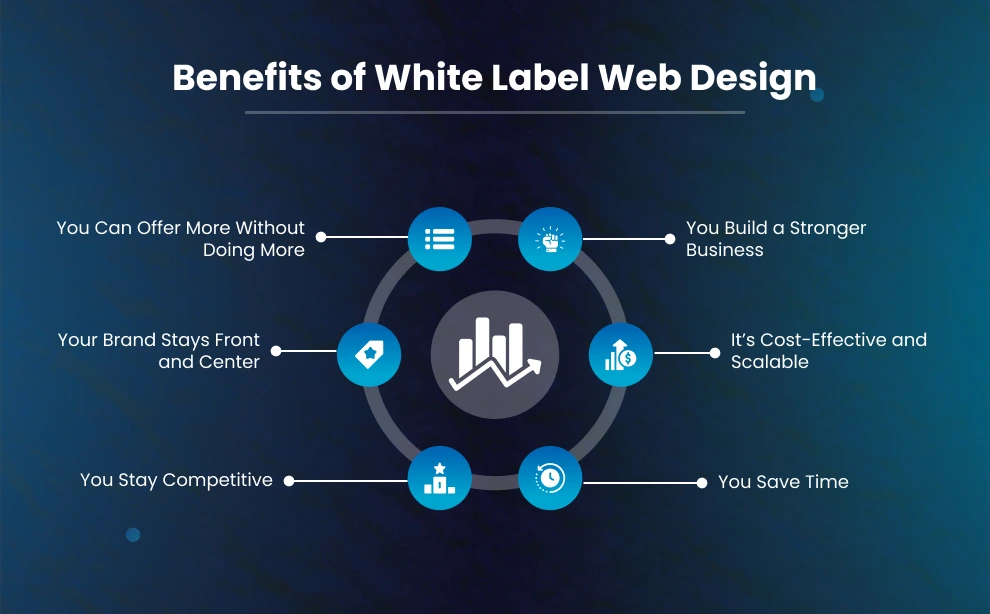
Here are some of the biggest advantages:
1. You Can Offer More Without Doing More
Most clients want a one-stop shop. They don’t want to juggle a marketing agency, a web designer, and a developer all at once — they want one team that can handle it all. With a solid white label partner, you can say “yes” to more client requests without adding more work to your plate.
You get to offer complete website design services – from landing pages to full custom builds – without needing to hire new people, manage freelancers, or learn to code.
2. You Save Time (And Headaches)
Let’s face it: building websites from scratch takes time. Managing revisions, testing across devices, making sure everything is responsive and SEO-friendly… it adds up fast.
By handing off the heavy lifting to your white label web development team, you free up hours (or even weeks) that you can use to focus on your core business, like strategy, client growth, or pitching new projects.
3. Your Brand Stays Front and Center
One of the best parts? The client never sees the white label team. Everything is delivered under your brand name, using your logo, tone, and style. To your clients, it looks and feels like your agency built it all from the ground up.
You maintain full control of the client relationship, the communication, and the credit, which helps build trust and strengthen your brand identity.
4. It’s Cost-Effective and Scalable
Hiring a full-time developer or designer isn’t cheap, and keeping them busy year-round can be tough if your workload fluctuates. White label services give you the flexibility to scale up when you need to, and pull back when you don’t.
You pay for what you need, when you need it. No overhead. No long-term commitment. Just a more efficient way to deliver quality work and grow your bottom line.
5. You Stay Competitive
The digital space moves fast. Agencies that can offer a full range of services – including web design – are in a stronger position to win new clients and keep current ones happy. If you’re not offering website creation, chances are your competitor is.
White label web design gives you the tools to stay in the game, even if you’re not a design or development expert.
6. You Build a Stronger Business
At the end of the day, this is about more than just outsourcing. It’s about creating a mutually beneficial relationship that helps your agency grow. A reliable white label solution becomes an extension of your team, giving you confidence to take on more work, go after bigger clients, and build a reputation for delivering results.
Also Read: How to Outsource Web Development: Avoid Common Mistakes
Who Should Use White Label Web Design?
If any of the earlier points sound familiar, chances are white label web design is something worth exploring. It’s not just for big agencies, it’s for any business that wants to deliver high-quality websites without the stress of building them in-house.
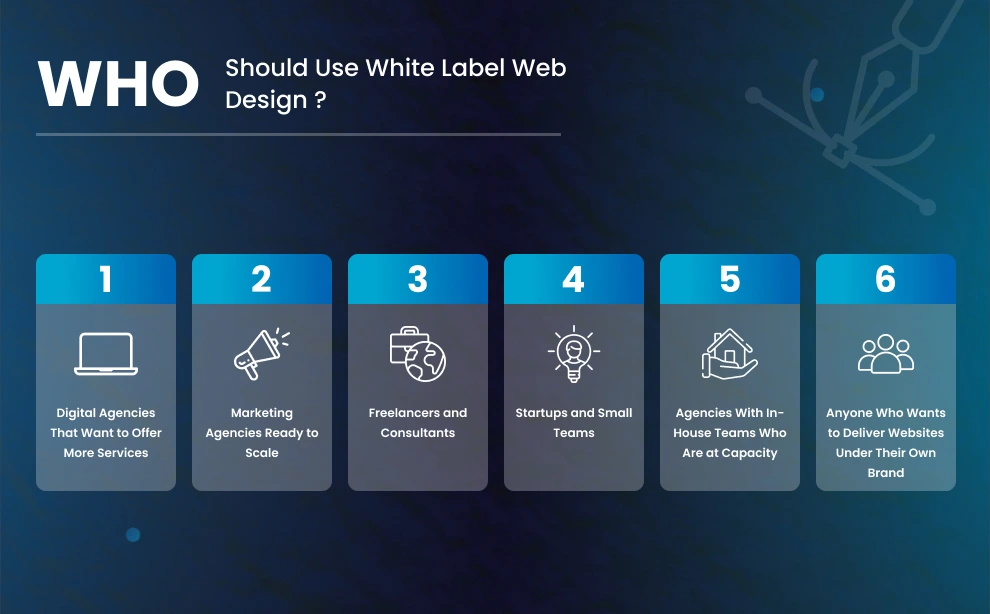
Let’s talk about who benefits most from this setup:
1. Digital Agencies That Want to Offer More Services
You’re already great at branding, content, SEO, or paid ads and now clients are asking for websites too. But hiring developers and designers just for a few projects doesn’t make sense. A white label partner lets you say “yes” without overcommitting. You stay focused on your strengths while still giving clients the full package.
2. Marketing Agencies Ready to Scale
If you’ve built trust with your clients through strategy or campaign work, adding web design to your services is a natural next step. With white label website design, you can expand your offering overnight, without sacrificing quality or worrying about technical details.
3. Freelancers and Consultants
You’ve got clients who need websites, but you don’t want to spend your nights figuring out WordPress or managing a developer. Partnering with a white label web development team means you can offer full-service packages while still flying solo — no team required.
4. Startups and Small Teams
Your business is growing, but hiring a full-time web team just isn’t in the budget (yet). A white label solution gives you access to experienced designers and developers whenever you need them, without long-term contracts or high overhead.
5. Agencies With In-House Teams Who Are at Capacity
Even if you have an internal design or dev team, there will be times when they’re swamped. A white label option is perfect for those overflow moments. You keep your delivery timelines on track, and your team avoids burnout.
6. Anyone Who Wants to Deliver Websites Under Their Own Brand
The key advantage here? You stay in control. Whether you’re using a white label website builder for quick launches or delivering full custom solutions, everything is branded as yours. Your clients never know you had help, and your agency gets all the credit.
Is That You?
If you’re juggling client demands, stretched for time, or looking to grow without taking on extra risk, white label might be exactly what your agency needs.
You don’t need to be a developer. You don’t need to build a massive team. You just need the right white label partner – someone who understands your goals and works behind the scenes to help you hit them.
What to Look for in a White Label Web Design Partner
Choosing the right white label partner is a big deal. You’re trusting another team to represent your brand behind the scenes, so the stakes are high. The right partner can make your agency look like a rockstar. The wrong one? Well… not so much.
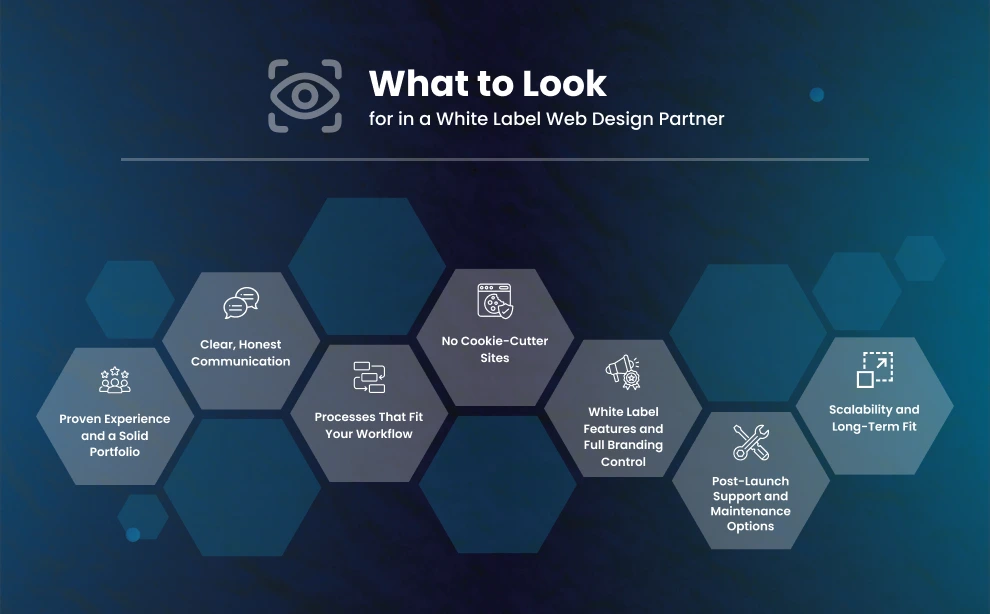
Here’s what to keep an eye on when you’re evaluating a white label agency:
1. Proven Experience and a Solid Portfolio
Before anything else, ask to see examples of their work. Have they built websites similar to what your clients need? Can they handle the platforms and tools you prefer — WordPress, Shopify, custom builds, or even their own white label website builder?
Look for clean, well-structured designs that load fast and work across devices. A good portfolio speaks louder than promises.
2. Clear, Honest Communication
You need a team that keeps you in the loop, not one that disappears halfway through the project. Find a partner who communicates clearly, meets deadlines, and updates you without needing to be chased down. This matters especially if you’re the one managing client expectations.
A strong white label relationship is built on transparency, even if it’s happening quietly behind the scenes.
3. Processes That Fit Your Workflow
Every agency works differently. Make sure your partner can adapt to how you do things – whether that’s project management in Trello or Asana, weekly update calls, or Slack for quick check-ins.
A good white label solution should feel like an extension of your team, not an external vendor.
4. No Cookie-Cutter Sites
Some projects are simple. Others are more complex. Make sure your partner can handle both – whether you need a fast turnaround with templates or a fully customized solution with advanced features. The more flexible they are, the better they can support your agency’s growth.
5. White Label Features and Full Branding Control
This one’s huge. Everything from the design files to client dashboards should reflect your brand identity, not theirs. Your logo, your color scheme, your name. The client should never see or suspect that someone else was involved.
You want a provider who understands the importance of keeping your own brand front and center.
6. Post-Launch Support and Maintenance Options
Websites don’t end at launch. Look for a partner who offers ongoing support, maintenance, and troubleshooting – even after the site is live. This adds long-term value for your clients and helps you offer website management as part of your ongoing services.
7. Scalability and Long-Term Fit
Can this partner grow with you? Whether you’re handling one site a month or ten, your provider should be able to scale with your demand. You don’t want to outgrow them in six months.
A strong white label agency becomes a long-term partner — someone who helps you grow, evolve, and take on bigger, better projects.
Choosing the right white label web design team isn’t just about outsourcing. It’s about building a mutually beneficial relationship with people you can rely on – so you can serve your clients better, and grow your agency with confidence.
Common Myths About White Label Web Design (And the Truth Behind Them)
White label web design is a smart way to grow your agency, but let’s be honest, there are still a few myths floating around that make people hesitate. If you’ve ever thought, “Isn’t that just outsourcing?” or “Won’t my client find out?” Well, you’re not alone.
Let’s clear the air and set the record straight.
Myth #1: “It’s Just Low-Quality Outsourcing”
The truth: Not even close – at least, not if you choose the right partner.
Good white label agencies care just as much about quality as you do. They know their work represents your brand, so they treat every project like it’s going to their own client. You’re not cutting corners – you’re collaborating with specialists who do this every day.
Myth #2: “My Client Will Know I Didn’t Build It”
The truth: Not if it’s done right.
When you work with a professional white label partner, everything – from the project files to the branding – is customized under your name. You manage communication, deliverables, and timelines. Your client only sees your agency. That’s the whole point of “white label.”
Myth #3: “It Feels Dishonest”
The truth: It’s actually a very common (and accepted) business model.
Think about it, plenty of companies use private label or white label solutions in other industries. Stores sell branded products made by manufacturers. Agencies use ghostwriters. The key is that you’re still responsible for the quality and client experience. You’re not hiding — you’re delegating with purpose.
Myth #4: “It’s Only for Agencies That Don’t Know How to Build Websites”
The truth: Many agencies with in-house teams still use white label services.
Sometimes your internal team is at capacity. Sometimes a project requires a skillset your team doesn’t have. Sometimes you just need to move faster. Smart agencies use white label options to stay flexible, not because they can’t, but because they know it’s more efficient.
Myth #5: “White Labeling Means Less Control”
The truth: You stay in complete control.
You decide how the process works. You set the tone with your client. You choose the features, platforms, and timelines. A good white label web design partner follows your lead and works the way you want to work, like an invisible extension of your team.
White labeling isn’t a shortcut or a compromise – it’s a smart, strategic way to deliver more value, without stretching yourself thin. Once you have the right partner, it just becomes part of how you do great work.
Conclusion
At the end of the day, most agencies don’t want to have an in-house website development team, but still they want to offer services.
Clients expect you to be a one-stop shop, and turning away web design work just means leaving money (and opportunity) on the table. That’s where white label web design makes a lot of sense.
You still get to deliver a solid website, complete with your own brand, your voice, and your client relationships fully intact, without hiring a team or spending weeks on website development yourself.
Whether you’re a small team juggling multiple clients, a growing marketing agency trying to scale, or a freelancer looking to offer more without burning out, this model gives you options. No extra overhead. No complicated hiring. Just a smart, flexible way to grow.
The key is finding a white label partner you trust — someone who understands the work, respects your process, and delivers like they’re part of your team.
If you’re in the business of building websites but don’t want to build them all yourself, white label is a pretty great solution.
Simple as that.
Still not sure if white label services are right for your agency?
We’ll walk you through how it works, what it costs, and how AgencyMinds can fit into your workflow.
Frequently Asked Questions
Nope — not if it’s done right. With a proper white label setup, your partner works behind the scenes, and everything is delivered under your own brand. Your logo, your communication, your process. To the client, it looks like your team built the site.
It starts with choosing the right white label partner. Look for someone with a strong portfolio, clear processes, and experience working with agencies like yours. You stay in control of the project — you review the work, give feedback, and only deliver it to your client once you’re happy with it.
Both. A good white label agency should be able to handle quick builds using a website builder or deliver full-tailored solutions depending on the client’s needs. It’s flexible — that’s the beauty of it.
Not at all. It works for freelancers, small agencies, and even startups. If you have clients who need websites and you want to offer that service without doing all the work yourself, white label is a great fit, no matter your size.
That’s up to you. Some white label teams offer ongoing maintenance, support, or even help managing social media accounts and updates. You decide what services to include in your offering, and your partner can support you in the background as needed.