 Ujjawal Laddha
Thinking about outsourcing web development this year but feeling kinda stuck? Yeah, that’s totally normal.
The thing is, web development projects can get complicated fast—especially when you are already busy running your business and don’t have extra time to babysit developers.
At AgencyMinds, we help businesses outsource web development (without the usual headaches!) every day. We know what questions you are asking yourself right now: Will these developers actually understand my vision? Is this gonna save me money or just create more hassle?
We have seen what works, and we have also seen plenty of mistakes that businesses often make. So we figured we’d share some straightforward insights from our own experiences on how to outsource web development successfully in 2025.
Sound helpful? Awesome—let’s jump in.
60 Second Summary
- Outsourcing in 2025 is smarter and more strategic, thanks to agile processes, global talent pools, and AI-enhanced workflows — but success still depends on planning and communication.
- Start with a clear web development plan: define goals, key features, tech stack, and timeline before reaching out to vendors.
- Vet your partners carefully — review portfolios, ask for references, conduct interviews, and consider a small test task to evaluate skills and fit.
- After onboarding, expert teams like AgencyMinds follow a structured process: discovery, design, agile development, testing, deployment, and post-launch support.
- Strong collaboration, regular feedback, and transparent expectations are the keys to turning an outsourced web project into a long-term digital success.
Why Outsourcing Web Development Makes Sense in 2025
So, why is everyone still outsourcing web development in 2025? Simple—because it works. And trust us, it makes even more sense now than it did a few years ago. Here’s why:
Cost-effectiveness (a.k.a. Saving Cash)
Let’s be real: budgets are tight. Hiring a full-time developer (or a whole team) locally can get pricey fast—especially when you factor in salaries, office space, benefits, and the rest.

Outsourcing lets you skip all that. You only pay for what you actually need, when you need it. No extra overhead, no long-term commitments, and—yeah, you guessed it—way less stress about your finances.
Sounds good, right?
Access to Global Talent (The Whole World is Your Talent Pool)
This one’s pretty straightforward. When you’re not stuck hiring only within your town or city, you can find developers with exactly the skills your project needs.

At AgencyMinds, we’ve seen businesses connect with amazing developers from literally anywhere—Europe, India, South America—you name it. Outsourcing lets you tap into talent you probably wouldn’t have found in your local area.
In short, you get better developers and better results.
Increased Flexibility and Scalability (Basically: Less Stress)
Business can change quickly, right? One minute you’re launching a small website, and the next, you’re scaling up fast. When you’re working with an outsourced team, adjusting your project size or scope is way easier.

PS: Need more help? Great, scale up. Need to pause things temporarily? No problem. Outsourcing makes it easy to adapt to whatever changes come your way—without having to reshuffle your entire team.
Current Trends in Outsourced Web Development
Now, let’s talk about what’s happening out there in web development outsourcing. Look, the concept of outsourcing web development isn’t exactly new—but it has definitely changed.
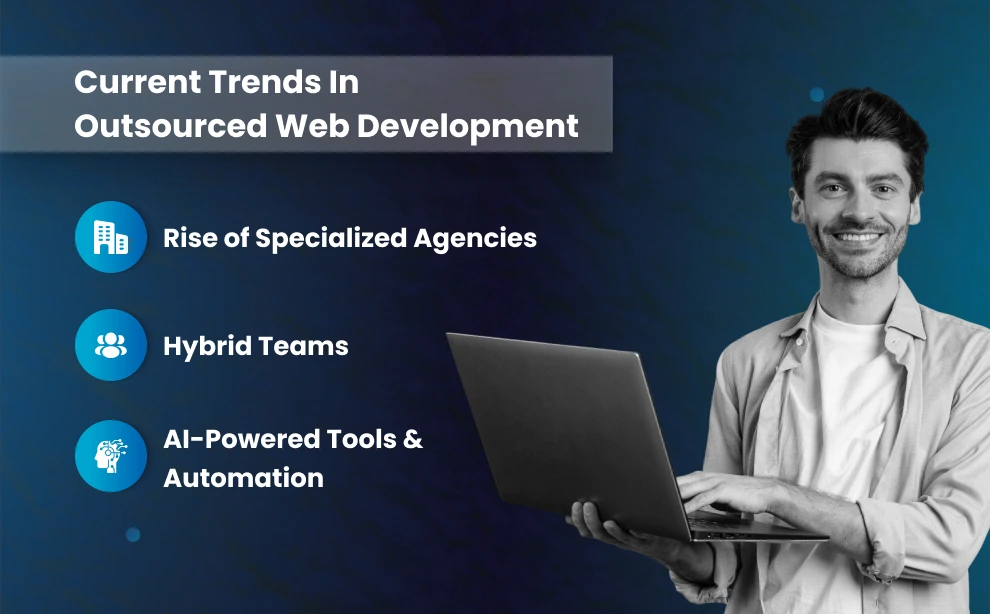
Let me explain how:
Rise of Specialized Agencies
These days, you don’t want just any web development team—you want someone who specializes in exactly what you need. Whether it’s Shopify stores, WordPress sites, complex web apps, or something totally custom, specialized agencies (like ours at AgencyMinds) are popping up everywhere.
Why does this matter?
Well, instead of getting an agency that’s just “okay” at everything, you are now able to hire pros who are super focused on your exact type of project. And yes, that means way better results and fewer headaches.
Hybrid Teams
Another thing we have noticed lately is that businesses are getting smarter about mixing remote and in-house teams. Maybe your in-house team handles planning and design while your outsourced dev team takes care of coding and testing.
Honestly, hybrid teams are awesome because you get the best of both worlds: clear communication, quicker project turnarounds, and everyone working on their strengths. In fact, it’s way less stressful than managing everything on your own.
AI-powered Tools and Automation
Okay, AI might sound kinda intimidating, but don’t worry—we are not talking about robots taking over (yet).
AI tools are just making web development smoother. Automated testing, quicker bug detection, code optimization—you get the picture. Developers (including ours at AgencyMinds) are using AI tools to speed things up, lower costs, and basically get rid of those boring, repetitive tasks nobody likes doing anyway.
How to Outsource Web Development
Okay, let’s get straight into it. You know you want to outsource your web development project, but you are not exactly sure how to get started without running into problems. As a White label web development company with more than a decade of experience, we have worked with tons of businesses that have successfully built websites, apps, and software products by outsourcing their software development and web projects.
Here’s our step-by-step advice for outsourcing to web development companies—minus the headaches:
Step 1: Clearly Define Your Project Goals

Before you even talk to any web development team, sit down and clearly outline what you need. No vague ideas—get specific:
- Project Scope: Exactly what features, pages, and integrations do you want?
- Timeline: Do you need your website or app done in a month, three months, or longer?
- Budget: Be realistic about how much you want to spend.
Trust us—skipping this step usually leads to misunderstandings and wasted time.
Step 2: Pick the Right Web Development Team
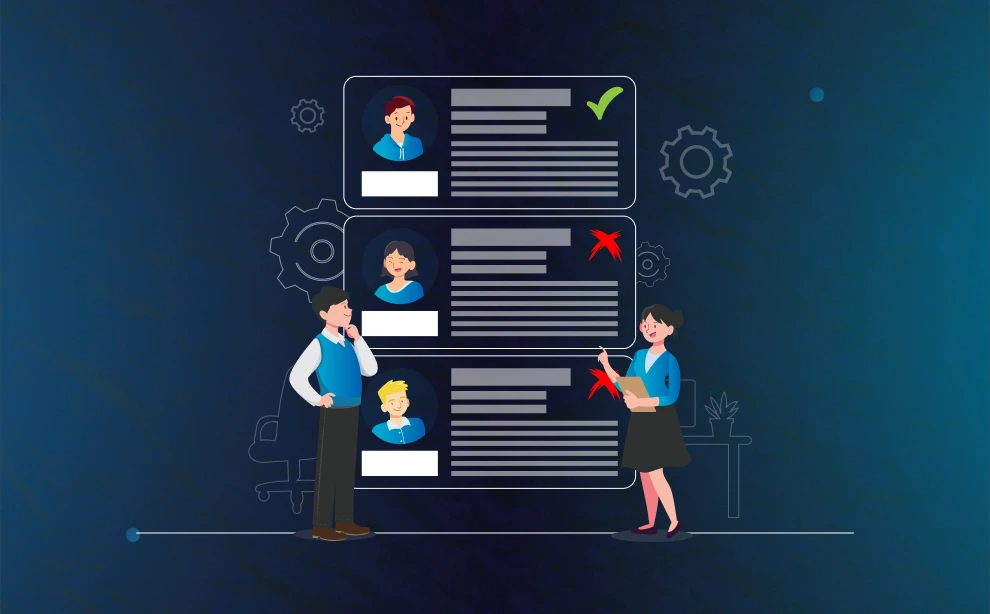
Not all web development companies are the same, so choosing the right one matters—a lot. To find the right match:
- Check Portfolios: Good teams have live examples of their previous work. Actually use their websites or apps, and see if they’re solid.
- Read Reviews Carefully: Look for specifics like communication skills, timelines, and whether they stick to budgets.
- Talk to Their Team: A quick chat or video call can tell you a lot. Do they seem organized? Do they ask good questions?
Step 3: Set Clear Expectations From Day One
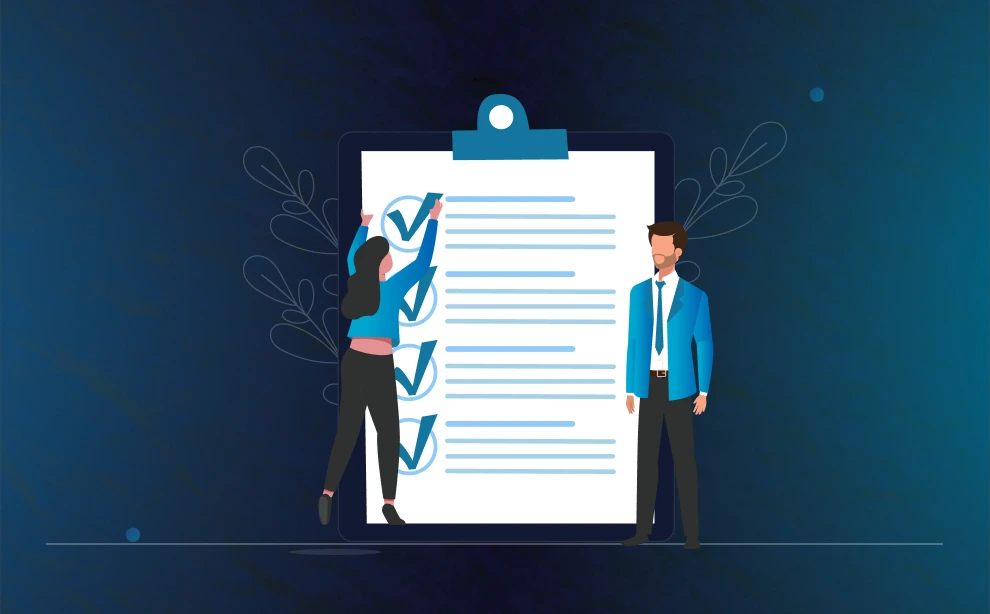
Good communication prevents a lot of the common pitfalls in outsourcing software development and web projects. Here’s what you should do:
- Establish Regular Check-Ins: Weekly meetings or at least regular updates through tools like Slack, Zoom, or Trello keep everyone accountable.
- Set Realistic Milestones: Break your project into clear phases with deadlines.
- Document Everything: Written records avoid confusion and give you peace of mind.
Step 4: Manage Your Budget Wisely

Outsourcing your software development or website shouldn’t blow your budget. Here’s how to stay on track financially:
- Understand the Pricing Clearly: Ask about what’s included, what’s not, and whether any additional costs might pop up.
- Avoid Paying 100% Upfront: Instead, use milestone-based payments to keep things fair.
- Plan for Flexibility: Projects evolve—make sure your chosen web development company can handle changes without crazy charges.
Step 5: Quality Check and Testing
The final step is crucial—testing and quality assurance. A great web development team will have clear QA processes. But it’s smart to double-check their work:
- Ask About Their Testing Methods: Automated testing, manual QA—how exactly do they ensure quality?
- Request a Demo: See your site or app in action before the project ends.
- Leave Time for Revisions: Don’t rush. Quality takes a bit of extra time, and that’s okay.
Web Development Plan: How Outsourced Teams Like AgencyMinds Execute Projects
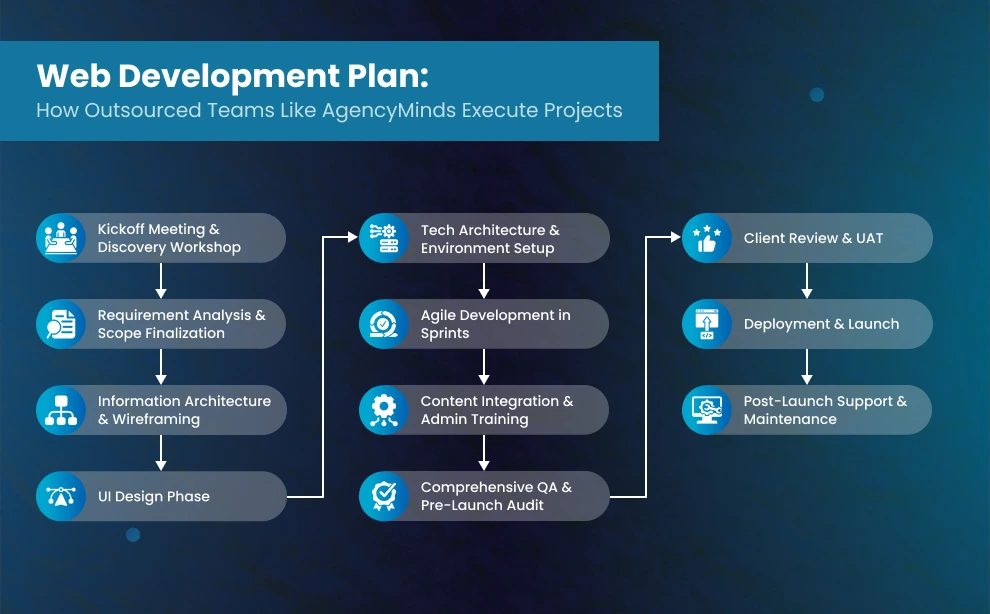
Once a web development project is secured, White label expert teams like AgencyMinds follow a well-structured and collaborative process to deliver high-quality digital experiences. Here’s a step-by-step look at how outsourced development partners take a project from kickoff to launch — with attention to scalability, security, and pixel-perfect execution.
1. Kickoff Meeting & Discovery Workshop
Once the contract is signed, the project begins with a discovery session involving key client stakeholders and the internal team:
- Understand the business goals, audience, and core user flows
- Gather branding assets, content sources, and reference sites
- Identify must-have features, integrations, and technical constraints
- Align on tools, communication channels, and sprint cadences
Deliverables: Discovery document, updated scope, roles & responsibilities matrix
2. Requirement Analysis & Scope Finalization
Next, the team performs an in-depth review of all functional and non-functional requirements:
- Clarify content structure, user permissions, and CMS workflows
- Decide on the CMS platform (e.g., WordPress, Drupal, Headless CMS)
- Plan for APIs, third-party services, multilingual support, etc.
- Estimate efforts and refine the project roadmap
Deliverables: Functional Specification Document (FSD), feature list, milestone plan
3. Information Architecture & Wireframing
With clarity on requirements, the UX team gets to work:
- Design the sitemap and page hierarchy
- Create wireframes to visualize layout and flow for key pages
- Ensure accessibility, mobile responsiveness, and user-centric design
Deliverables: Sitemap, interactive wireframes, user journey mapping
4. UI Design Phase
Once wireframes are approved, UI designers bring the visual language to life:
- Design mockups in tools like Figma or Adobe XD
- Apply the brand’s typography, colors, and imagery
- Prepare responsive breakpoints (desktop, tablet, mobile)
- Iterate with client feedback
Deliverables: Final UI kit, responsive mockups, design assets for dev handoff
5. Tech Architecture & Environment Setup
Before development begins, the tech leads prepare the backend infrastructure:
- Choose frontend/backend frameworks (React, Vue, Laravel, etc.)
- Set up dev/staging/production environments
- Configure CI/CD pipelines, repositories (e.g., Git), and deployment tools
- Ensure code standards, linting, and security protocols are in place
Deliverables: Tech stack documentation, environment access, repo setup
6. Agile Development in Sprints
Development is executed using agile methodology:
- Each sprint includes planning, dev, testing, and demo
- Backend developers set up CMS logic, data structures, custom modules
- Frontend team integrates the UI, ensures responsiveness and animations
- Regular internal code reviews and QA for early issue detection
Deliverables: Sprint tasks, release notes, bi-weekly demos, changelogs
7. Content Integration & Admin Training
Once features are stable:
- The team integrates all final content (text, media, products, etc.)
- CMS is configured for client-specific workflows, permissions, and localization
- Admins are trained on how to manage the website
Deliverables: Populated staging site, CMS guide, recorded training sessions
8. Comprehensive QA & Pre-Launch Audit
Rigorous testing is carried out across devices and browsers:
- Functional testing: forms, navigation, dynamic content, filters, etc.
- Performance testing: site speed, Core Web Vitals, load handling
- SEO checklist: metadata, sitemaps, canonical URLs, schema
- Accessibility (WCAG), cross-browser compatibility, security scans
Deliverables: QA report, resolved bug logs, performance benchmark report
9. Client Review & UAT (User Acceptance Testing)
The client is invited to the staging environment to test:
- Review key user flows and CMS functionality
- Submit final change requests
- Get approvals for go-live
Deliverables: UAT checklist, client sign-off document
10. Deployment & Launch
After UAT approval:
- Final code is pushed to the production server
- DNS, SSL, and cache/CDN settings are configured
- Final launch checklist is executed to ensure everything is stable
Deliverables: Live website, launch confirmation, backup & rollback plan
11. Post-Launch Support & Maintenance
Post-launch, the team stays engaged to:
- Monitor uptime, errors, analytics
- Provide support for bug fixes or quick changes
- Offer long-term maintenance or transition to the client’s internal team
Deliverables: Support plan, analytics dashboard, maintenance SLA (if applicable)
Expert Tips for Choosing the Right Outsourcing Partner
Alright, you’ve got your plan—but choosing the right partner for outsourcing web development services? Yeah, that part can still feel tricky. At AgencyMinds, providing top-notch web development services is what we do every day, so trust us—we know exactly what to look for.
Here’s how to make sure you’re picking the right partner for your next web development project:
Look Beyond Just Technical Skills
Sure, technical know-how matters, especially when you’re paying for professional web development services. But honestly? It’s not the whole picture. What you really need is someone who:
- Actually listens to your ideas and asks smart questions.
- Understands your industry enough to “get” what your business needs.
- Communicates clearly and doesn’t leave you waiting days for a simple update.
In short, choose someone who’s easy to work with—not just someone who knows how to code.
Watch Out for Red Flags (Seriously, Trust Your Gut!)
When outsourcing web development services, it’s easy to get excited and overlook some red flags. But slow down and pay attention to these warning signs:
- Vague answers: Good developers offering quality web development services will always give clear explanations.
- Too-good-to-be-true promises: Ultra-cheap prices and lightning-fast turnarounds usually mean trouble.
- Agencies that feel distracted or too busy: If they’re not giving you attention now, just imagine how tough it’ll be once your project gets going.
Pricing Matters—But Don’t Get Stuck on the Lowest Price
We totally get it—cost matters. But here’s the deal: the cheapest web development services usually end up costing you more down the line. Instead, find someone offering fair, clear, and transparent pricing.
Be sure you clearly understand:
- Exactly what you’re paying for (no hidden fees).
- If costs could change mid-project.
- How flexible the pricing is if your project scope grows or shrinks.
This will save you money—and headaches—in the long run.
Managing Communication and Collaboration Effectively
Let’s talk communication—because honestly, when you are outsourcing web development projects, getting this part right is super important. Clear communication keeps everyone on the same page and ensures your development process moves smoothly without unnecessary drama.
Here’s how to manage your project effectively (without stress!):
Use Project Management Tools that Actually Work
The right project management tools can be a game-changer. They keep everyone organized, on track, and in sync—so your outsourced development feels easy.
Some tools we highly recommend include:
- Trello or Asana for tracking tasks, deadlines, and milestones clearly.
- Slack or Microsoft Teams for quick, daily conversations, sharing ideas, and troubleshooting.
- Zoom or Google Meet for face-to-face check-ins (trust us, seeing each other once in a while helps build stronger relationships).
- Jira or Basecamp for more detailed tracking of your development process, especially if your project gets complex.
Just pick something you feel comfortable with—no need to use complicated tools if you prefer simplicity.
Set Expectations for Regular Check-ins (Don’t Wing It!)
Regular check-ins are your best friend when outsourcing web development projects. Seriously—nothing kills a project faster than bad communication or missed updates.
Here’s how to do check-ins right:
- Schedule Weekly Meetings: Short meetings, even just 20 minutes, help keep everyone accountable.
- Get Progress Updates in Writing: Quick, simple status updates every few days are perfect.
- Have Clear Milestones and Reporting: Agree upfront how often you’ll review progress and adjust your timelines or deliverables.
This structure saves you from confusion and headaches later.
Be Mindful of Cultural Differences (It Really Matters)
Cultural sensitivity might sound like a fancy buzzword, but it genuinely helps your development process run smoother—especially if your outsourced team is global.
Here’s how to navigate it:
- Understand Time Zones: Be fair about when you schedule meetings, and try not to schedule late-night or super-early calls too often.
- Clarify Communication Styles: Some cultures are more direct; others prefer subtlety. Be upfront about what works for you.
- Encourage Open Communication: Let your team know they can ask questions freely. This prevents misunderstandings down the line.
Common Challenges in Outsourced Web Development (and How to Handle Them)
Let’s say, an outsourcing website development project usually goes smoothly—but hey, sometimes challenges pop up. That’s totally normal. The trick is knowing how to deal with these challenges without stressing out.
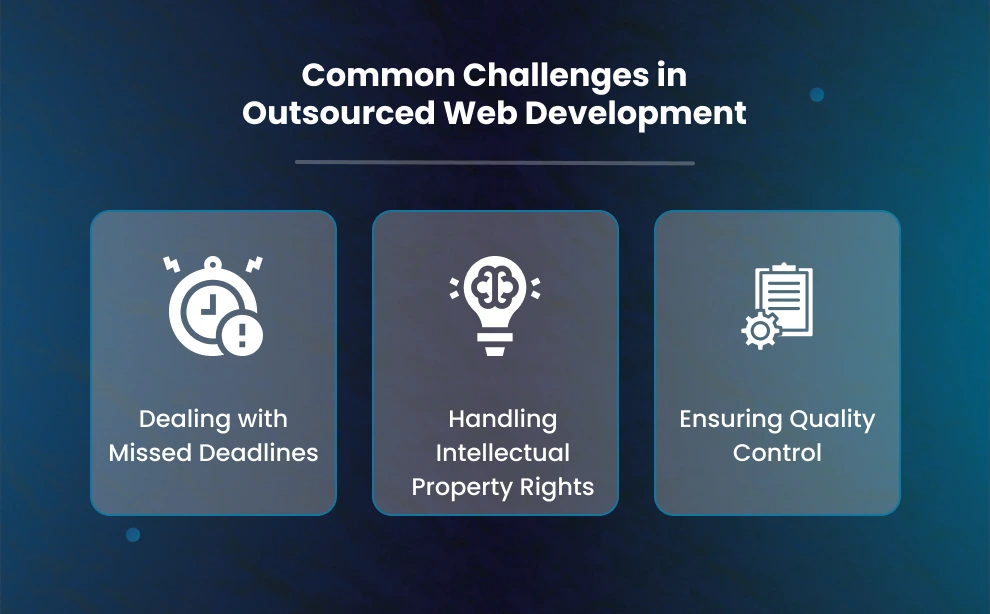
This is what you might face (and exactly how to handle it):
Dealing with Missed Deadlines (Because, Let’s Be Honest, It Happens)
Missed deadlines can be frustrating—but they don’t have to derail your whole project. If your development team starts missing deadlines, here’s what you should do:
- Speak Up Early: Don’t wait until the deadline passes. Ask about progress regularly to spot delays ahead of time.
- Set Realistic Timelines: Be clear (and honest) about deadlines from the start, and always build in a bit of extra time.l
- Find Out Why: If deadlines keep slipping, figure out the issue. Is it poor planning, unclear goals, or just a one-time hiccup? Once you know, you can fix it.
Ensuring Quality Control (Don’t Just Trust—Always Verify)
Quality is a big concern with outsourced web development—and yeah, it should be. Here’s how to ensure your final product actually matches your expectations:
- Ask for Regular Demos: Regular check-ins with live demos make sure your team stays on track with your vision.
- Use a Clear Testing Process: Agree upfront on how testing will be handled. Automated tests, manual checks, or a mix of both—just make sure it’s happening consistently.
- Provide Detailed Feedback: If something’s off, say so clearly. Quick, honest feedback keeps quality high and avoids bigger issues later.
Handling Intellectual Property Rights (Because You Need to Protect Your Work)
Intellectual property (IP) can feel complicated, but it’s super important. When outsourcing your web development, make sure you do the following:
- Discuss IP Clearly at the Start: Who owns what? Confirm that you have full rights to the finished product.
- Put It in Writing: Always include clear IP terms in your contract to avoid confusion later.
- Understand Licensing: Sometimes developers use third-party tools or code—just make sure licenses are clear and documented.
A Tip: Dealing with challenges gets way easier when you are prepared. Keep these tips handy, and you will stay stress-free—even when things don’t go perfectly.
The Future of Outsourced Web Development Post-2025
Curious about where outsourced web development is headed after 2025? You’re not alone. The industry is evolving fast, and if you’re thinking about partnering with IT outsourcing companies or hiring remote web developers, it’s good to know what’s coming next.
Here’s what we’re seeing based on years of web development experience and staying close to industry shifts:
How Technology Advancements Might Change Outsourcing
Let’s be honest—tech isn’t slowing down. New tools and platforms are popping up constantly, and they’re making the web development process faster, smoother, and more efficient.
What this means for you:
- Quicker Turnaround Times: As tools get better, web developers will be able to deliver high-quality work in less time.
- Better Collaboration: Working with teams across the globe will feel even more seamless thanks to smarter platforms and communication tools.
- Smarter Project Planning: Advanced software will help outsourcing companies offer more accurate timelines and estimates—no more guesswork.
The Evolving Role of AI and Automation
AI is already changing how we build websites and apps, and it’s only going to grow. But that doesn’t mean it’s replacing developers—it’s making them more powerful.
Here’s what you can expect:
- AI-Assisted Coding: Tools that help web developers write cleaner, faster code.
- Automation in Testing and QA: Say goodbye to slow manual testing—AI can catch bugs early and improve quality.
- Streamlined Project Management: AI tools will support faster decision-making and smoother workflows throughout the web development process.
The Continuing Importance of Human Expertise
Even with all the automation in the world, one thing won’t change: People still matter. A lot.
Here’s why human expertise still wins:
- Creative Problem Solving: No AI can fully replace the way experienced web developers think through complex challenges.
- Understanding Your Business: Real people can listen, ask the right questions, and tailor your website to your goals—not just follow templates.
- Building Trust: The best outsourcing companies know that relationships are everything. Clear communication, reliability, and transparency are still key to a great web development experience.
Conclusion
Outsourcing web development in 2025 isn’t just a cost-saving tactic—it’s a strategic advantage. When done right, it gives you access to top global talent, lets you scale effortlessly, and keeps your project moving fast without sacrificing quality.
But here’s the truth: Success doesn’t come from hiring just any team. It comes from partnering with people who understand your goals, communicate clearly, and genuinely care about delivering results. That’s why defining your project clearly, setting expectations, and choosing the right agency (yes, one that knows what they are doing) makes all the difference.
Technology is evolving, AI is becoming a core part of the development process, and hybrid collaboration is the new normal. The future of web development is fast, flexible, and full of opportunity—if you’ve got the right team by your side.
At AgencyMinds, we’re not just developers—we’re partners who help you bring your vision to life, minus the stress and confusion. So, if you’re ready to outsource smarter, avoid the usual pitfalls, and enjoy the process, we’ve got your back.
Let’s build something great together.
Have a Web Project in Mind?
Share your requirements with our expert team and get a tailored proposal — no strings attached.
Frequently Asked Questions
Timelines vary based on complexity. A basic marketing site might take 4–6 weeks, while a custom CMS-based platform or e-commerce store could take 10–16 weeks or more. Experienced teams like cmsMinds break projects into sprints for faster, more flexible delivery.
Choose a team that works with agile methodology, shares regular updates, and uses tools like Jira, Slack, or ClickUp. Weekly demos, documented feedback loops, and clear deliverables at each phase go a long way in keeping things on track.
A solid project brief should cover your business goals, target audience, key features, design preferences, timeline, and budget. The more clarity you provide upfront, the smoother the development process will be — and the fewer surprises later on.
Your involvement is crucial — especially during the early phases (discovery, design approvals, and feedback rounds). While your outsourced team handles execution, you’ll still need to:
Provide timely feedback
- Approve milestones
- Share content or assets when needed
- Treat it like a collaboration, not a hand-off. The more aligned you are, the better the outcome.
Yes, most professional development partners — like cmsMinds — offer post-launch support that can include:
- Bug fixes
- CMS training
- Performance monitoring
- Ongoing maintenance or feature enhancements
Be sure to clarify support terms during the contract phase. You can also opt for a long-term maintenance plan if you don’t have an internal dev team.